YES2 SpaceMail — What It Was Like to Build a Satellite as a Student
Twenty years ago, a 30-kilometre thread of polyethylene fibre — thinner than a guitar string — unspooled from a Russian spacecraft over the steppes of Kazakhstan. At the end of that thread hung a small spherical capsule called Fotino, packed with science payload and a parachute, trying to become the first object ever delivered from orbit to Earth without a rocket engine. The experiment was called YES2. I helped build it.
Looking back now, it’s one of those projects that sounds more implausible the more you explain it. Hundreds of students. Twenty-two countries. Five years of development on a shoestring budget. A 30 km tether that would briefly become the longest man-made object in space. And a team where most of the engineers — myself included — were learning what a Critical Design Review even was while simultaneously trying to pass one.
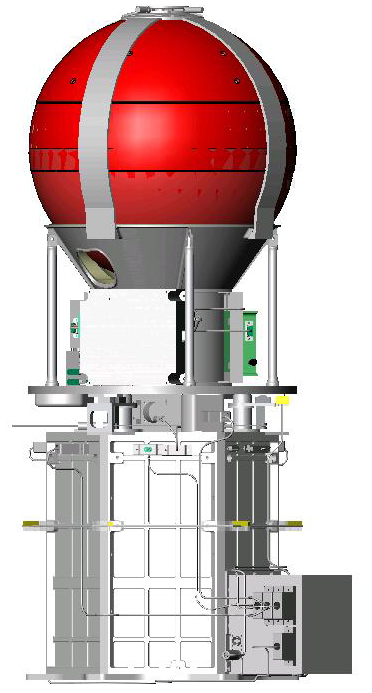 Image credit: Delta-Utec SRC
The Idea: SpaceMail
The concept behind the second Young Engineers’ Satellite, or YES2, was elegant in the way that genuinely clever engineering ideas tend to be. Rather than using a rocket to slow a re-entry capsule down from orbital speed, you exploit gravity and orbital mechanics to do the work for free.
Here’s the basic physics: if you dangle a mass below a spacecraft on a long tether, the lower object sits in a slightly different gravitational field and moves at a slightly different orbital velocity. The longer the tether, the bigger the effect. Deploy enough tether — 30 km in YES2’s case — swing the capsule down and forward in the right arc, cut it loose at exactly the right moment, and it re-enters the atmosphere on a trajectory that takes it to a specific point on the ground. No fuel. No retro-rocket. Just a very, very long string and some careful orbital mechanics.
The concept had been proposed in 1994 by Dutch astronaut Wubbo Ockels. The small Dutch company Delta-Utec, led by Michiel Kruijff and Erik van der Heide, had been working to turn it into a real demonstration ever since. YES2 was that demonstration, flying as a 36 kg passenger on the Foton-M3 microgravity mission in September 2007. A Dutch-led project, designed and built by hundreds of students from 22 countries, on an ESA mission, aboard a Russian spacecraft — a true international endeavour.
The hardware came in three parts. FLOYD (Foton Located YES2 Deployer) was the 22 kg tether deployer, bolted directly onto the Foton spacecraft. It housed the tether spool — 31.7 km of 0.5 mm Dyneema wound with extraordinary precision onto an aluminium core — plus the on-board computer, the ejection system, and a barberpole brake mechanism that controlled deployment speed by friction. MASS (Mechanical and data Acquisition Support System) was the 8 kg subsatellite at the other end of the tether, carrying science instruments and the GPS receiver. And Fotino was the 6 kg spherical re-entry capsule, 40 cm across, clad in alumina ceramic and silicon ablator, containing pressure sensors, thermocouples, an Argos beacon, and a parachute that was supposed to open at 5 km altitude.
Deployment happened in two stages. First, MASS and Fotino were spring-ejected from FLOYD at 2.4 m/s and the tether paid out slowly to 3.5 km over one full orbit, while a controller kept tension levels stable. Then a command triggered the second stage: the brake released, gravity gradient forces took over, and the tether deployed at exponentially increasing speed to its full 30 km length in about 35 minutes. At full extension, the tether swung back underneath Foton like a pendulum. At the bottom of that swing, a timer fired three small pyrotechnic cutters to release Fotino. Ten seconds later, FLOYD cut the tether on the Foton end, freeing MASS and the remaining tether to burn up on re-entry. Fotino was on its own.
The whole active mission lasted less than seven hours.
A written description of the mission is necessarily technical — luckily there is a rather nice video that brings the whole thing to life:
The Team
YES2 was, officially, a project of ESA’s Education Department, managed by Delta-Utec. In practice it was something stranger and more interesting: a distributed network of university groups — called Centers of Expertise — each responsible for a specific technical domain, coordinating across time zones and language barriers with whatever tools students typically have access to, which is to say: not many good ones.
Four Centers of Expertise carried the main technical load. Samara State Aerospace University in Russia handled mission analysis and GPS. The University of Modena and Reggio Emilia in Italy developed the Fotino re-entry capsule. The University of Patras in Greece covered mechanical and thermal systems. And Hochschule Niederrhein in Krefeld, Germany — my university — was responsible for the tether.
Over the five-year project lifetime, around 400 students from 50 universities contributed in some form. At any given moment, 40 to 60 were actively working. Students cycled through on three-to-six month internships, which created a constant challenge of knowledge transfer — by the time someone really understood the system, it was often time for them to leave.
How I Got Involved
I first heard about YES2 from a professor in class. With internship season coming up, space sounded like a genuinely interesting direction — so I applied. Together with three other students from Krefeld, I was accepted. Starting in July 2006, I became the Harnessing Systems Engineer for YES2, while also contributing to the system engineering tool ALBATRoS.
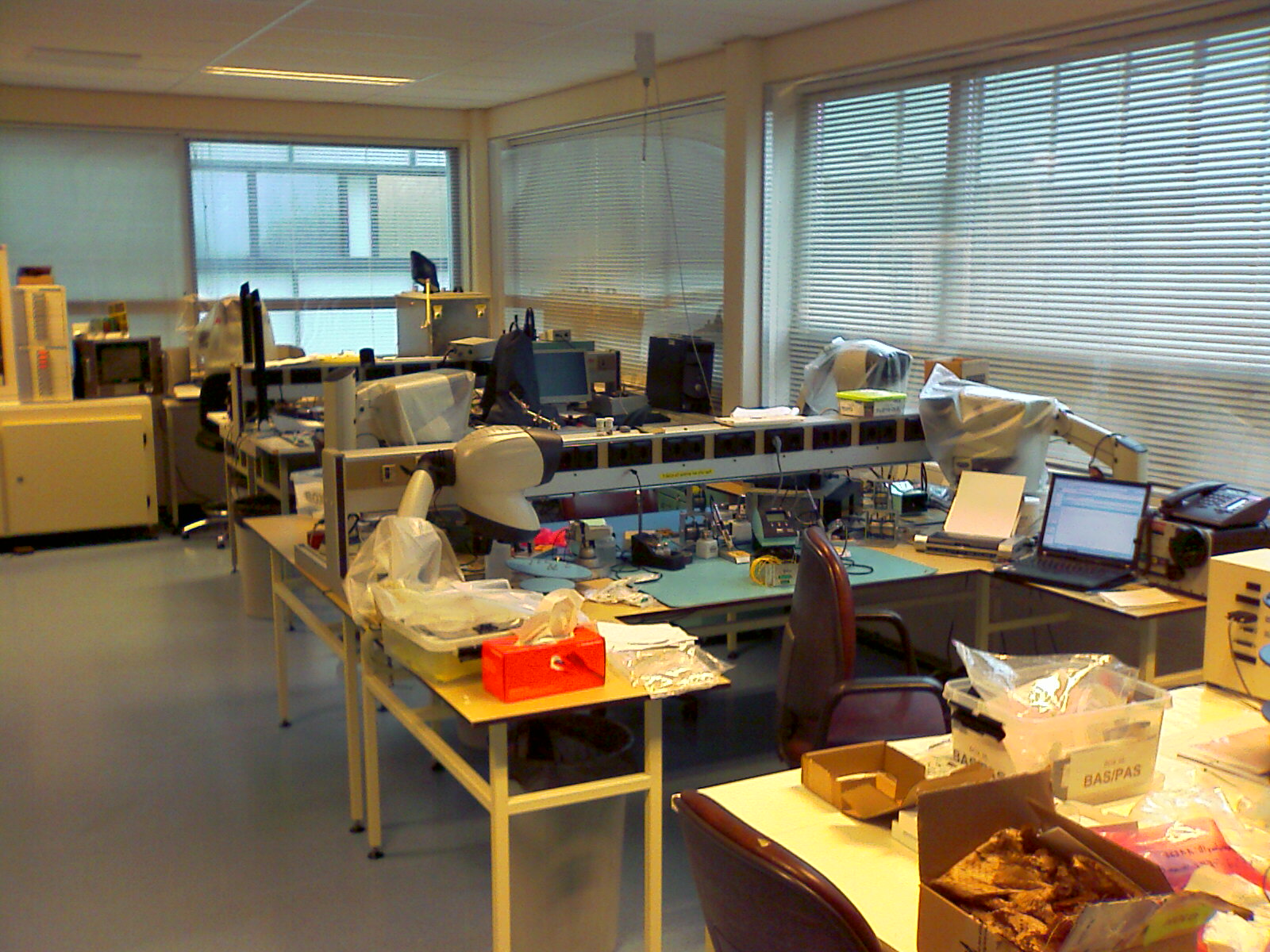
I moved to Leiden in the Netherlands, sharing apartments with other students on the project — the kind of living arrangement that comes with doing a six-month internship at a small startup working on a satellite. When I joined, the project was already in its final stretch, about a year out from launch. Design work was largely done; the hardware had to be built. Initially I worked out of the Delta-Utec office in Leiden, where students were crammed around tables and every other available surface — very different from what I had imagined a space project would look like.
It turned out that the students before me had spent very little time thinking about the harness, so I had to work out a large portion of it myself, with guidance from Michiel, Fabio De Pascale, and experts from ESA at the European Space and Technology Centre (ESTEC) in Noordwijk, about 30 minutes away. At ESTEC I worked closely with Jason Page, who gave us access to the clean room to produce all the cables for the satellite and showed me how to solder space-rated connections and handle flight hardware properly.
One thing worth noting: while YES2 was a student project in name, the hardware itself was entirely proper space-rated equipment. The satellite went through the full qualification test campaign before launch — shaker tests, thermal cycling, electromagnetic compatibility testing, and more. This was partly to ensure the mission would succeed, but also to give ESA confidence that we wouldn’t damage any of the other experiments or flight systems aboard Foton. The standards were real, and meeting them with a student team was no small thing. After all, in the end the hardware we built ended up on the very real Foton-M3, a failure of our hardware could have led to a problem for them - like entangling the spacecraft in 30km of tether, which could have meant the failure of the whole research mission and not just that of a student project.
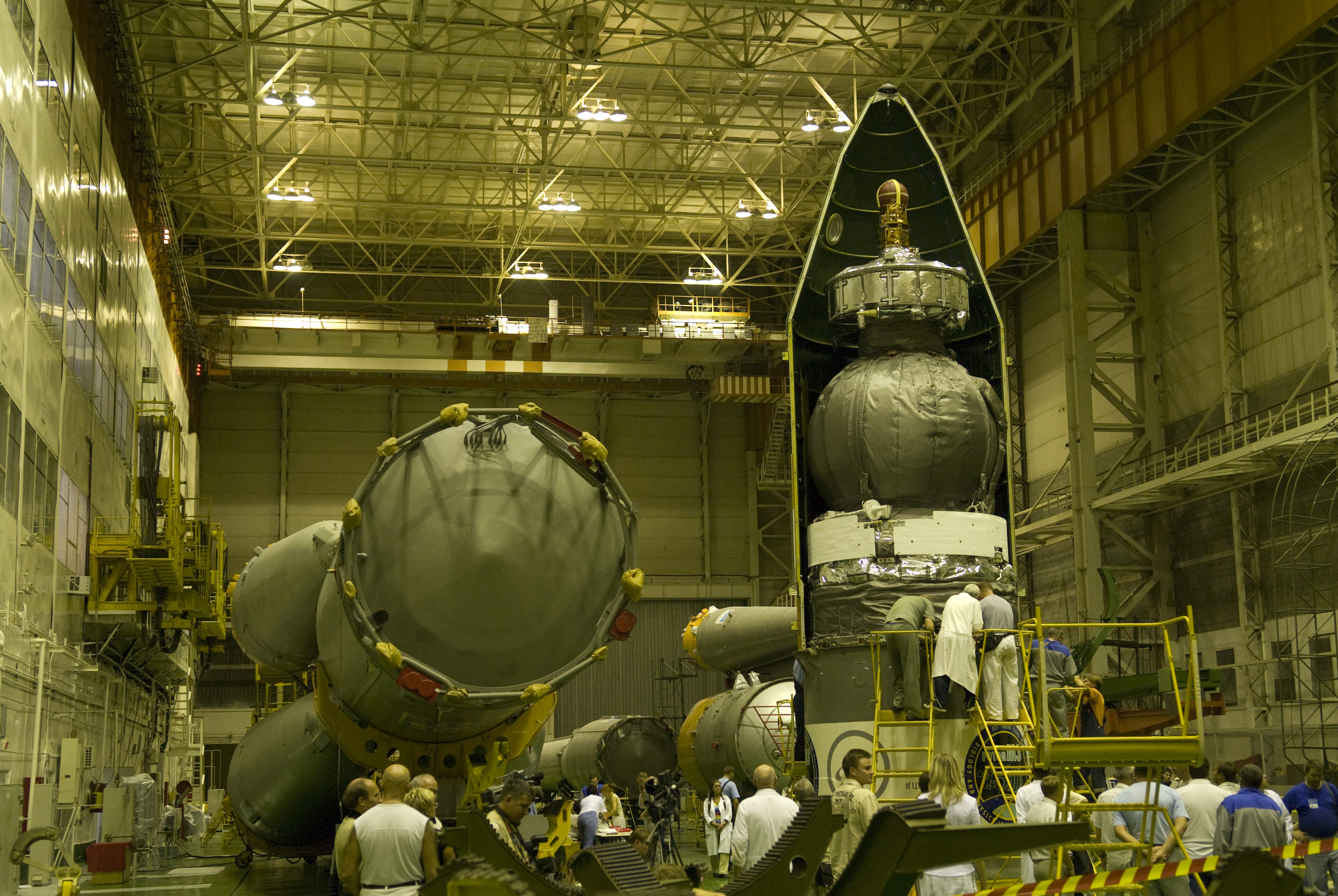 Image credit: ESA
So I spent months designing and manufacturing the harness. That meant making sure each individual connection was properly documented in the engineering database, verifying the shielding concept, and then spending weeks in the clean room soldering and crimping connections. In later jobs I worked extensively with circular military connectors, which aren’t cheap — but nothing quite compares to space-rated hardware, where the qualification documentation alone can cost nearly as much as the parts themselves. At the time I didn’t fully appreciate how unusual it was to be handed that kind of responsibility as a student. Looking back, it was a remarkable amount of trust to place in someone who had never built anything remotely like it before.
ALBATRoS: Building the Tool While Using It
The team figured out pretty early that managing a satellite project across many universities, with a rotating cast of students and no shared tooling, was nearly as hard as the engineering itself — and the harness was a good example of why. Every connection, every signal, every pin assignment had to live somewhere that the whole team could access and trust.
Which is why, in parallel with the hardware work, a small team led by Fabio De Pascale built ALBATRoS — Automated Listing, Budgeting And Tracing Repository. It was a web-based system engineering database that tried to pull together everything the project needed in one place: parts lists, mass budgets, requirements, harness documentation, design review actions, task assignments, contact information. The idea was simple: if you had one tool, accessible to everyone at any time from anywhere, you could replace the endless cycle of someone collecting inputs into a spreadsheet, reformatting them, chasing the gaps, and producing a document that was already out of date by the time it arrived.
It sounds straightforward. It was not. But by the time YES2 reached its integration phase, ALBATRoS had become the backbone of the project’s configuration control. Engineers who had never used a formal system engineering tool were navigating it naturally — starting, typically, with the phone book feature — and gradually working their way up to filing Review Item Discrepancies and generating harness production documents automatically from the database.
Looking back through the lens of what PLM and requirements management tools try to do today, ALBATRoS was ahead of its time for something built by students with no budget and a lot of determination. In fact, in many projects since, I’ve found myself wishing I had something equivalent. The real secret, I think, was that Fabio and his team were building the tool while also being deep inside the project — a tight feedback loop that meant every new feature solved a real problem someone had that week. That dynamic is something I want to explore further at some point, with AI agents as a modern equivalent.
September 25, 2007
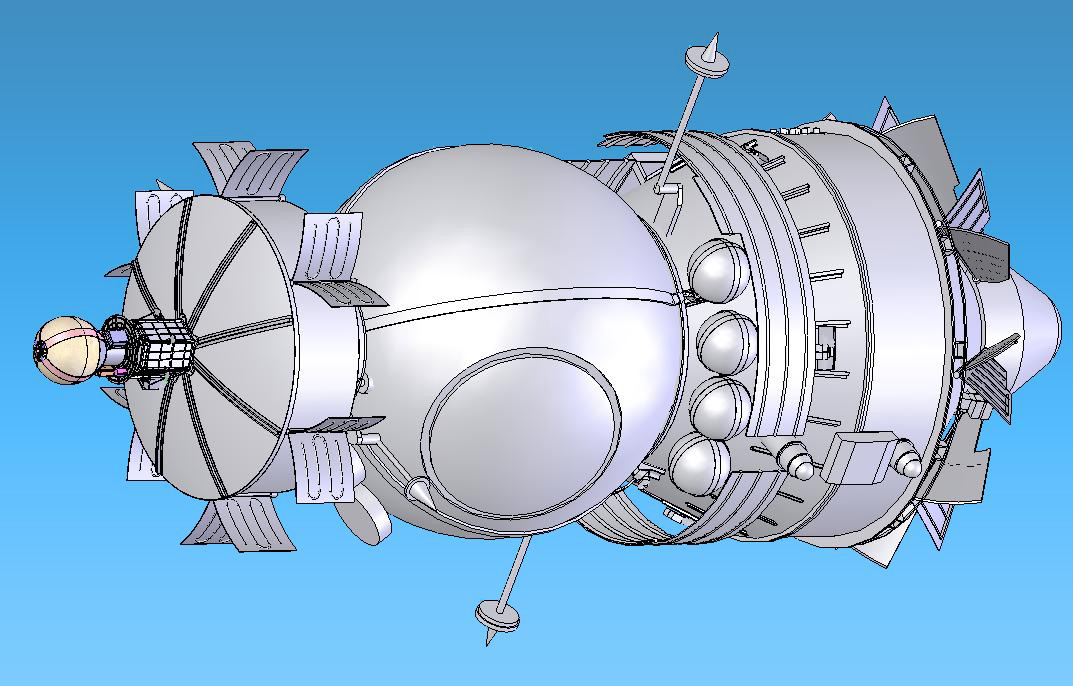
The mission executed on the 11th day of the Foton-M3 flight, one day before Foton’s own re-entry. Ground control in Moscow sent the time-tagged telecommands. FLOYD powered up. MASS and Fotino ejected cleanly. The tether paid out.
Post-mission analysis confirmed the tether deployed to its full 31.7 km — a new world record for the longest artificial structure in space, later recognized in the Guinness Book of Records. The tether was reportedly visible to the naked eye from parts of South America and Russia, appearing larger than the Moon.
Fotino was never found.
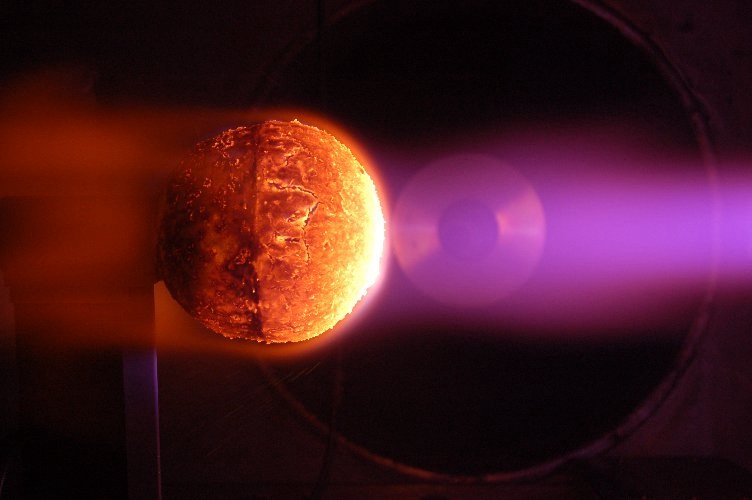 Image credit: Delta-Utec SRC
The capsule separated as planned, but no signal was ever received from it after re-entry. Calculations suggested it may have landed somewhere near the Aral Sea, or possibly burned up entirely. The ARGOS beacon that was supposed to triangulate its position within three hours of landing remained silent. For a project that had taken five years and 400 people to build, that silence was hard to sit with.
As for me — I wasn’t watching from a control room. Together with Michiel, Erik, and Marco Stelzer, I had written the overview paper on the YES2 project, and together with Fabio a paper on ALBATRoS, and I was presenting both at the International Astronautical Congress in Hyderabad, India, with ESA’s support. By a remarkable coincidence, I was standing at the podium presenting the YES2 mission paper at almost exactly the moment the actual mission was executing in orbit above us.
Afterwards, waiting for news, I found myself in the congress’s internet café with Wubbo Ockels himself — the astronaut who had originally proposed the SpaceMail concept back in 1994.
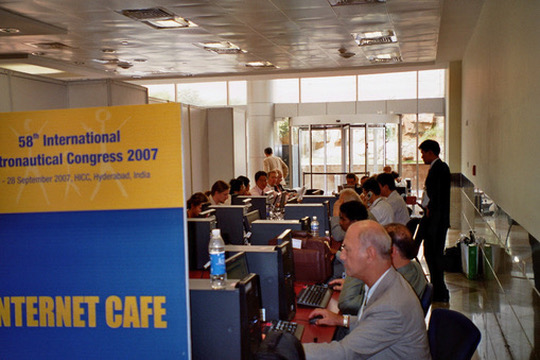
Both of us refreshed whatever screens we could find, hoping for a signal from Fotino. It never came.
In many ways, that September was a surreal experience.
What It Left Behind
The tether technology itself never made it to a follow-on operational mission — space debris removal and propellantless re-entry remain active research areas, but the path from demonstration to operational system is long. YES2 remains one of only three experiments ever to demonstrate tether-assisted payload delivery from orbit.
What stayed with me more immediately were lessons that had nothing to do with orbital mechanics. Running a project across geographies with limited resources and high turnover forces you to build systems and processes that work without you. ALBATRoS was one expression of that instinct — the recognition that if information lives in someone’s head or in a local spreadsheet, it’s already half-lost. Distributed teams need shared ground truth, and the system engineer’s job is to create and protect that ground truth, not to hoard it. It’s a principle I’ve carried into every project since.
More broadly, YES2 changed the trajectory of my career — and my life, really. Without it, I probably wouldn’t have gone into the space industry or started working at DLR, where I went on to be responsible for the operations of ESA’s Materials Science Laboratory onboard the International Space Station. It’s hard to put into words how much I learned, both professionally and personally. It was one of the most rewarding experiences of my career.
Twenty years on, it’s still the most technically ambitious thing I’ve been part of by some margin. A half-millimetre thread, 30 kilometres long, unspooling in orbit. A spherical capsule made of foam and ceramic trying to survive 750 kW/m² of re-entry heating. A team of students, somehow, making it work.
Almost all of it worked.